
|
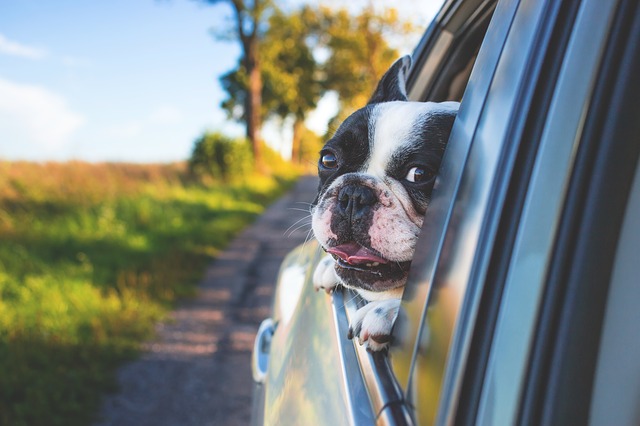
Safest Dog Crate for Car Travel
|
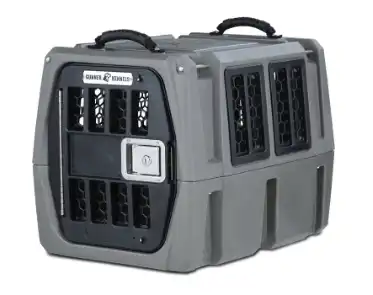
Most Affordable Dog Car Carrier
|
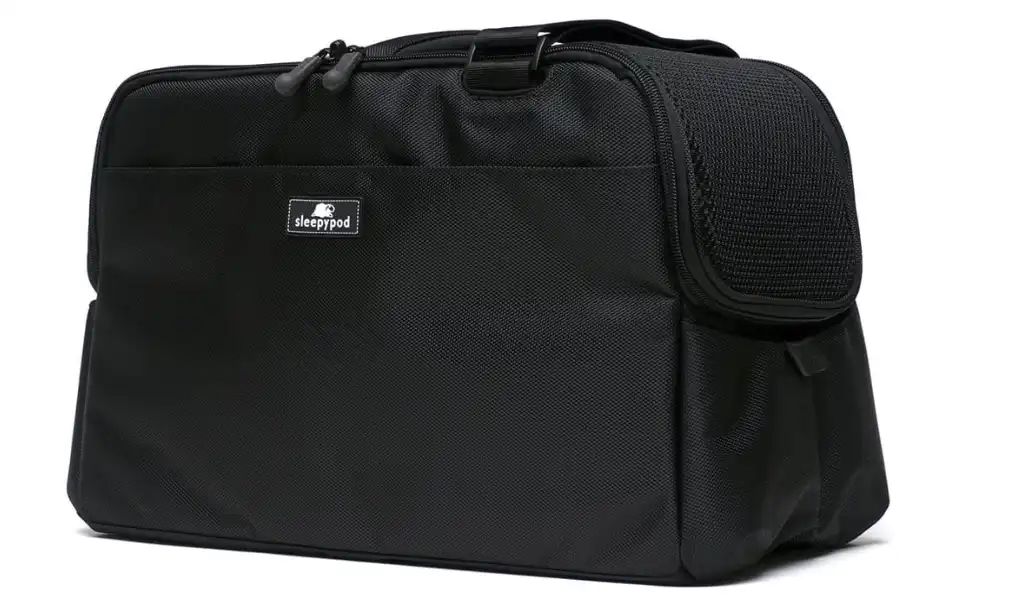
Most Stylish Dog Carrier for Car Travel

|
In some cases, harnesses can be the better option for car-riding canines. We break down some of the situations in which this is the case and list some of our favorites in our guide to crash-tested dog car harnesses.
Safest Dog Crates & Carriers for the Car
In this article, we’ve only covered crates that have been crash-tested by the Center for Pet Safety (CPS) and — in some cases– other testing organizations like the Technical Research Institute of Sweden.
We will be noting for each crate what its qualifications are for being considered “crash tested” so you can make the best call for you and your pooch!
1. Lucky Duck Dog Crash-Tested Kennel

A locking, hard-sided crate that’s earned a 5-star rating and is available in sizes suitable for dogs up to 110 pounds.
- Medium: 23.5”L x 17.4”W x 17”H
- Intermediate: 30.25”L x 20.5”W x 22”H
- Large: 35.75”L x 22”W x 26.5”H
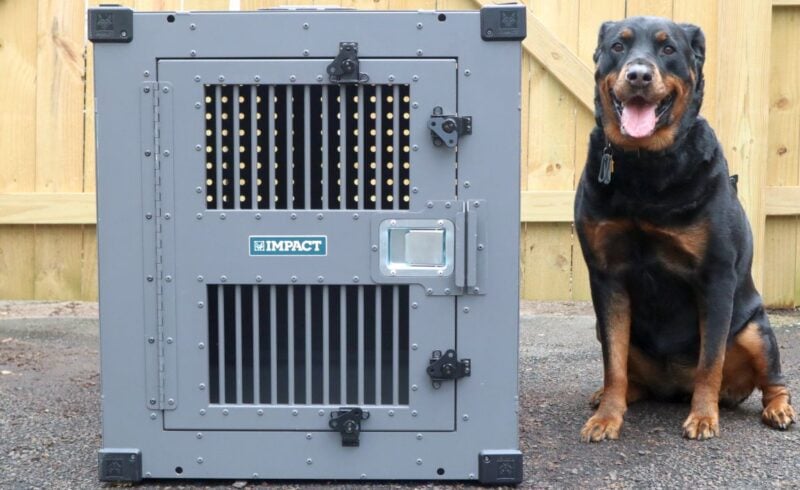
2. Gunner G1 – The Toughest!

A tough-as-nails carrier featuring multiple locks, a stainless steel door, and dual-wall construction for impact protection.
- Small: 0"-23" Height | Under 30 lbs
- Medium: 23.5" - 33" Height | 31 - 45 lbs
- Intermediate: 33.5" - 42" | 46 - 70 lbs
- Large: 43.5" - 53" Height | 71 - 110 lbs
3. Rock Creek Aluminum Kennel – Medium

Sleek-looking crash-tested crate with nifty bonus features, unique color options, and the ability to select a side-opening door.
4. MIM Variocage Single
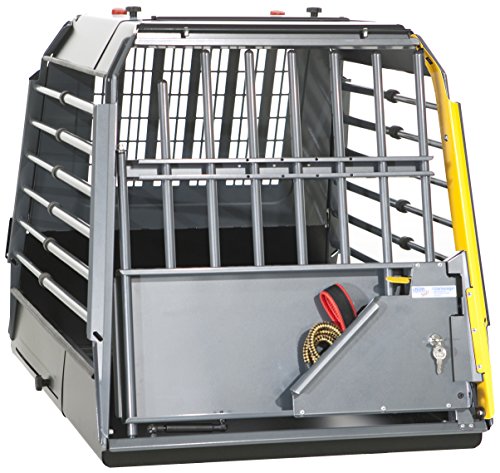
A stainless steel kennel crash-rated for various accident scenarios, including front, rear, and rollover collisions.
5. Ruff Land Kennel

A rugged canine carrier whose angled back was designed with SUV and crossover cargo areas in mind.
6. Cabela’s GunDog Intermediate Dog Kennel

Sturdy single-construction crash-tested crate approved for up to 75 lbs.
- 23" H x 21" W x 30" D
Crash-Tested Soft Carriers
7. Sleepypod Atom

A wallet-friendly bag that transforms from a crash-rated canine car seat to a stylish messenger tote with ease.
8. Sleepypod Mobile Pet Bed
A canine carrier that mimics your four-footer’s bed with its soft, fuzzy interior and rounded shape.
- 17"L x 17"W x 13.5"H
9. Sleepypod Air

A favorite for woofs with wanderlust featuring a 4-star crash rating and an airline-friendly shape.
- 22" x 10.5" x 10.5"
How Do I Measure My Dog For a Car Carrier?

Whether you use a soft- or hard-sided crate, you must keep your canine’s comfort in mind and make sure your fur baby gets the right size crate. Essentially, this means that you need a car carrier that is large enough that your doggo can stand up in it and lie down comfortably.
Measure from your dog’s neck (aka where the collar sits) to the base of the tail. Then, add a few inches. That’s the length you want to shoot for.

For height, measure from the top of your dog’s shoulders to the ground. If you’re buying a soft-sided crate or soft-sided carrier (or any kind of soft crate in general), you should add 2 to 3 inches to the height measurement. For hard carriers, add 3 to 5 inches.

Also, make sure to keep weight recommendations in mind when trying to pick the perfect size crate for your fur baby — pet owners with dogs falling between two sizes should probably opt for the larger size!
It’s worth noting that different manufacturers use different sizing calculations for kennel measuring. Some ask you to measure to from your dog’s butt to the shoulder, while others may ask for the whole tail-to-nose-tip length. Follow each individual manufacturer’s sizing guidelines to be safe!
Why Dogs Need to Be Secured in the Car
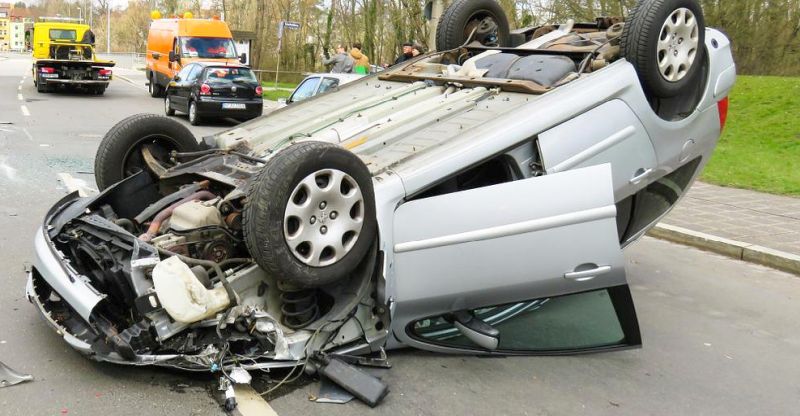
Whether you opt to use a dog car crate, or some other kind of canine car restraint, your dog needs to be secure while you’re driving.
Many owners opt to let their dog have free reign in the car, but this can be very dangerous for both owners and pets. For one, in the event of an accident, your dog will become an instant projectile, flying through the windshield and injuring you, other passengers, and himself.
Unrestrained dogs are also a common cause of distracted driving. Author Stephen King famously got into a horrific, nearly-fatal car accident when the other driver took his eyes off the road to correct his misbehaving dog.
Having an unrestrained dog in your car often results in distracted driving — using a restraint will keep both you and your dog safer.
This infographic from CarRentals.com shows how dogs often cause distracted driving!
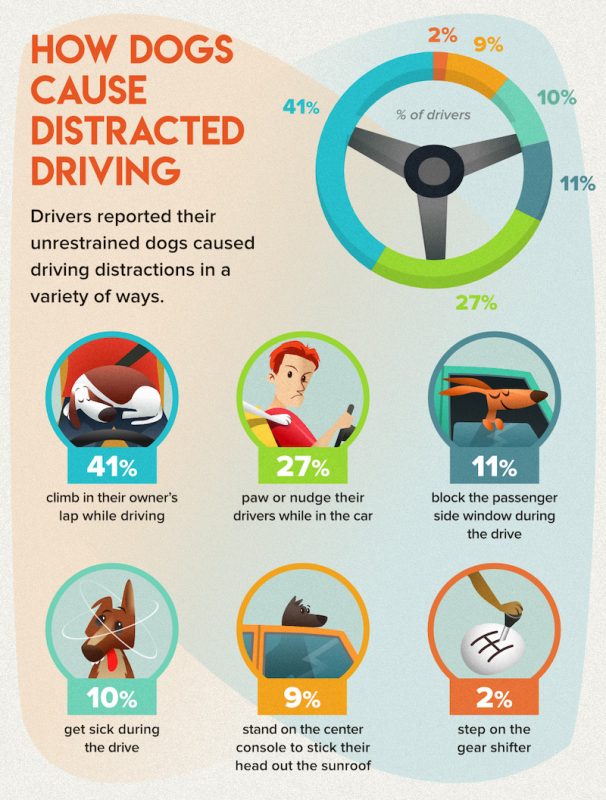
Even though it’s fun to have your pup by your side as a copilot, the distraction of your dog can be deadly for you both. It’s just not worth the risk!
The Search For A Safe Dog Car Crate
There are a number of things you’ll want to look for (as well as things you’ll want to avoid) when picking a safe dog car crate.
What to seek out in a car crate or carrier
Starting with the things you DO want in a car crate, be sure to look for a crate that is:
Of Sufficient and Suitable Size. Pay attention to the size of your dog, compared to the size of the crate or carrier. A dog car crate should never be 6 inches longer than your dog. This is because the snugness is actually part of what is keeping your dog safe — providing too much excess space means increased momentum and force on impact, resulting in a more dangerous crash for your dog.
Built with High-Quality Connection Points. If your crate’s connectors aren’t strong and up to snuff, the crate will go flying in an accident. And that kind of defeats the whole points of having a sturdy dog car crate! In many dog crash tests, connector safety straps were a key point of failure.
What to avoid in a car crate or carrier
On the flip side, you’ll want to avoid car carriers and crates featuring the following characteristics:
Wire Construction. Wire dog crates can be quite useful in many scenarios, but the car is not one of them. Wire crates just won’t do a ton to protect your fur baby in a car accident. While they are suitable for stopping your dog from distracting you while driving, a wire crate may collapse upon impact.
Soft-Sided Crates. Soft-sided carriers and soft crates are fine enclosures for general use (especially if they’re made from something like durable nylon), and they work great as airline approved in-cabin carriers. However, a fabric crate will do little-to-nothing when it comes to protecting your pooch in a car accident. Since the carriers are soft, most will immediately collapse on impact.
Plastic. The majority of plastic crates have been reported to fracture and break upon impact, leaving your dog unsecure. Most traditional plastic crates simply aren’t sturdy enough to be crash-proof. Nevertheless, a few crash-tested crates are made from very durable plastic, so just be sure to dig in and do your homework before making a choice.
So what does that leave? Well…not much. The dog crates and carriers that have been deemed crash safe are few and far between. However, there are a few that are will work, and we’ll share them below.
The terms “dog crate” and “dog carrier” are often used interchangeably. In fact, we do so all the time.
However, some manufacturers and safety organizations — including the Center for Pet Safety (CPS) — make a pretty clear distinction between the two.
In these cases, the term “crates” is reserved for relatively large containment devices, which are typically meant to be placed in the cargo area of a truck, van, or SUV. By contrast, “carriers” are usually for smaller pets, and they’re designed to ride in the back seat.
CPS Study Reveals That the Majority of Dog Crates Aren’t Safe

The CPS (Center for Pet Safety) is a non-profit research and advocacy organization that conducts crash tests for various dog safety products.
The organization was established in 2011 after realizing the disturbing fact that there are no performance standards or test protocols for testing pet safety devices.
Key Lesson: Don’t Believe The Marketing
The truth is that manufacturers of canine car crates and carriers aren’t even required to test their products. Many crates and carriers that market themselves as “crash tested” and safe fail to provide substantial protection in the event of an accident.
Most crates or harnesses that claim to be “crash tested” were only evaluated, at the manufacturer’s discretion, for one size. This means that a crate might pass for a very small dog, but lacks the stability and security for a medium or large sized dog.
It is quite shocking that dog car crates and carriers aren’t held to the same rigorous government safety standards that child car seats and other vehicle safety devices are — especially considering that a compromised crate can injure both pets and humans.
Car crates with connector safety straps that fail under stress means that your dog crate could go flying, hurting any passengers in the way (as well as your canine).
CPS Crash Worthiness Study & Testing Plan
After realizing the horrifying gaps in dog car crate and carrier testing, the CPS organization began conducting rigorous testing through the use of specially designed fake crash test dogs.
The CPS teamed up with Subaru to do an objective study in an independent, third-party testing facility in Virginia. A startling number of car crates and dog car carriers failed, but thankfully, a few performed well and are now being recognized as the life-saving devices that they are!
This video explains a bit about the testing and highlights the three winners. We go into more detail about the winning crates below, but this video offers a nice quick overview:
How The CPS Testing Works
In the CPS (Center for Pet Safety) Crash Worthiness Study, two tests were performed.
One was completed with a crate placed in the back cargo area of a vehicle, with the back seats folded downwards, and the crate being secured through connector straps. The vast majority of crates failed in this scenario.
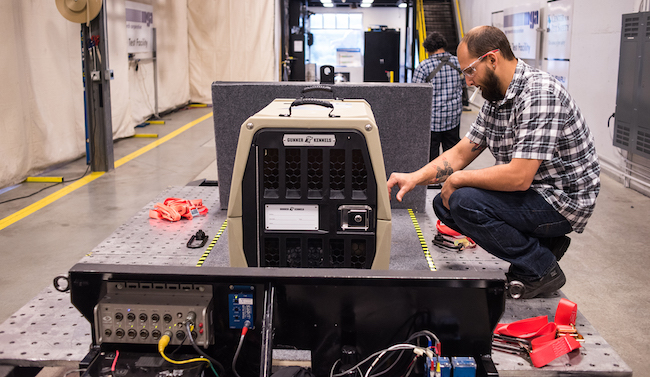
In the second test, dog car crates were again placed in the cargo area, this time with one side of the crate resting against the back side section of the back seats (which were kept in the upright position, rather than folded down flat). This allowed the crates to have additional support through the seatback, and many more crates were able to pass this test.
However, the problem is that if the crate relies on the car’s seatback for support, there is an increased risk of a seatback failure in the event of a front impact if the dog and crate have a combined weight that exceeds 40 pounds.
This wouldn’t just put your dog at risk, but your passengers too. So, in many cases, using the seatback support for your dog’s crate is not safe or recommended.
Let’s take a look at the top winners for the most secure and safe dog car carriers and crates!
Give Careful Consideration to Where the Crate Goes
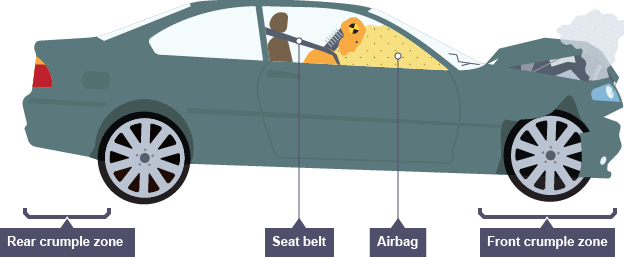
Many owners place their dog’s car crate or pet kennel in the back of the car — the traditional cargo area. But unfortunately, this isn’t always a safe area for your pooch to be.
In many cars, the front and back sections are designed to be “crumple zones” when involved in accidents. The idea is that, by allowing certain sections of the car to crumple on impact, passengers in the interior of the car may remain safe.
This can be life-saving technology — so long as your loved ones aren’t stuck in one of those crumple zones.
Crumple zones can vary, especially when it comes to larger cars and SUVs that use more of the back car space for seating (making those areas unsafe to be designed as crumple zones, therefore making them safe areas to keep your dog).
Back crumple zones may not be a threat with all cars, but we recommend consulting with your car dealership to determine what the crumple zones of your car are. And then, make sure to place your dog’s pet kennel away from that dangerous crumple zone.
Placing your dog in the front seat isn’t a viable option either, as that exposes your dog to front passenger airbags, which are designed to save a human’s life — not your dog’s. Similar to how you shouldn’t place a child in the passenger seat, due to their size in relation to the airbag trajectory, dogs also can’t safely be placed in the passenger seat.
Usually, the back seat is the best place to install your dog’s car travel crate.
This is also the position where your dog will likely be the most comfortable. One study revealed that dogs exhibit less stress in the car when they are positioned closer to their humans, and can visually see them from where they are positioned. This can be key in helping reduce a dog’s anxiety in the car.
For Larger Dogs, Security Is Even More Important
While dog car safety is important for all canines, special care needs to be given to big dogs. Simply put, big dogs need a super durable crate.
Large dogs are even more of a dangerous projectile than small dogs, as a 70-pound canine body hurtling through your car at 70 miles per hour is going to be a whole lot more dangerous than a 10-pound dog.
However, even a small dog can exert a tremendous amount of force at high speeds.
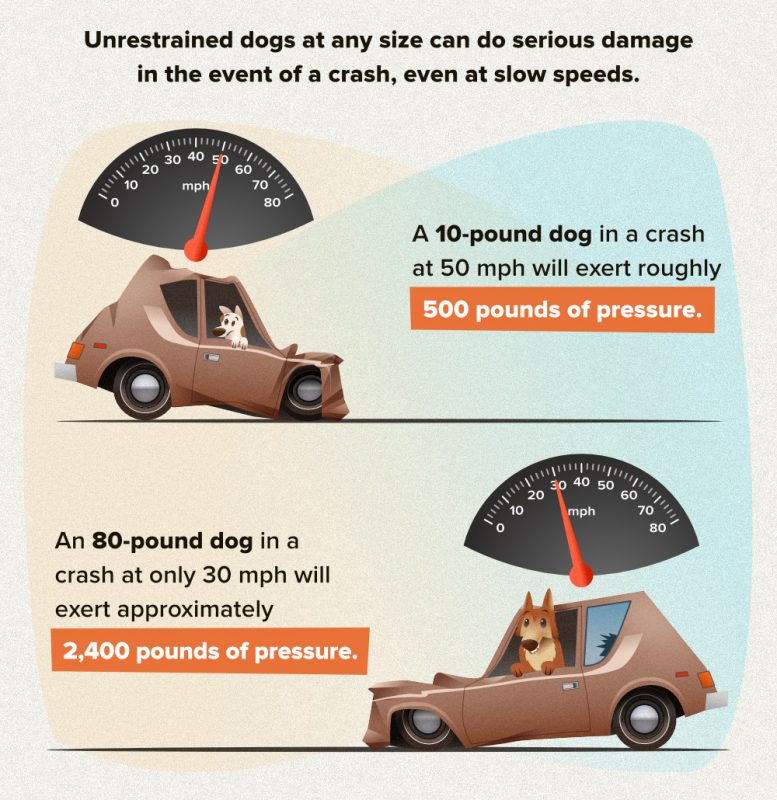
On top of that, larger dogs will experience more force on impact. Unfortunately, this collision force is so strong that very few dog crates can hold up — the list of car-safe dog crates for big dogs is a very short one.
Additional Things to Seek in a Car Carrier for Dogs
Aside from the characteristics we’ve already discussed, you should also look for a few other things in any car carrier — whether it is crash-tested car crate or not.
- Soft material on the inside: In addition to keeping your fur baby safe, you’ll want to look for a carrier that’s also comfy!
- Keep the crate’s weight in mind: Generally speaking, you’ll want to look for the lightest crate you can find that still provides the safety and security your doggo deserves.
- A water-resistant base: Even the best-trained pooches can have the occasional accident, so always try to stick to carriers with a water-resistant base.
- Portability: Because of the very nature of car crates, you’ll want to ensure you select one that is as easy as possible to move around. That doesn’t necessarily mean you need to pick a collapsible dog crate, but it should be one you can move around easily.
Distraction Prevention Vs Crash-Proof Power

It’s worth noting that while the majority of budget-friendly and popular consumer crates and carriers failed the safety test, most of these failed crash products do help substantially at least when it comes to distraction prevention.
Having your dog secured in the back seat, away from the driver, means a safer driving experience and, as a result, puts the entire car at lower risk for an accident.
So while the vast majority of crates will not protect your dog in an accident, even a poorly cash-tested device will likely be better than none at all. This holds true for many dog booster car seats and dog seat belts as well — most provide virtually no protection in an accident, but they will keep your pup from pestering you while you drive.
Still, we want to prevent distractions and keep our dogs safe, so we’d certainly suggest opting for a dog car crate or carrier that is capable of doing both!
What to Do If You and Your Dog Are in a Car Accident
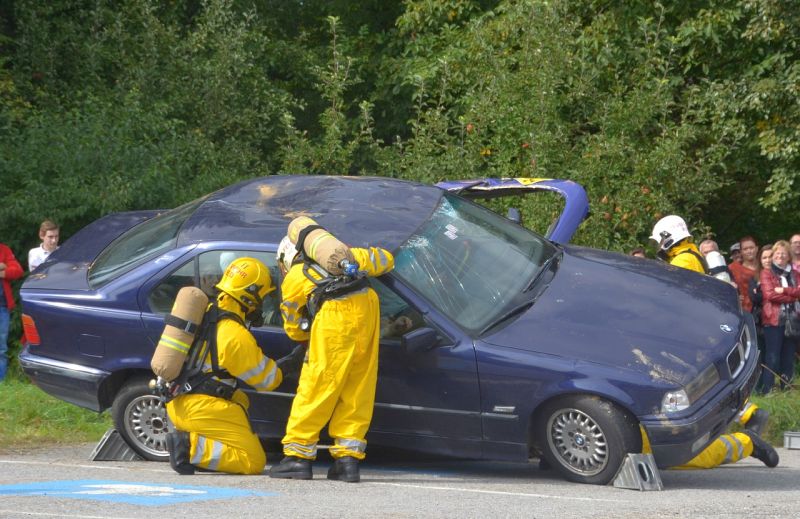
Unfortunately, no matter how safe we try to be, accidents happen.
If you and your pup are in a car accident, your utmost priority is safety, so now more than ever, keep a level head and assess the situation.
Follow basic safety steps to ensure you and your four-footer’s well-being:
- Pull into a safe area, if you can. If you’re involved in a minor fender-bender on a busy roadway, it’s best for all parties to move to the shoulder, if possible, to avoid another collision (some states even have “If you can steer it; clear it” laws in place). It’s all too common for a two-vehicle crash to worsen.
- Assess the vehicle’s safety. Are there any fluids or smoke being released into or out of the vehicle? Can you smell gas or chemicals? Are there downed live wires outside? The answers to these questions greatly affect your next actions. Downed wires outside of the car mean staying inside, while smoke, gas, or chemical leaks require you to grab your pooch and get out of the car pronto .
- Check yourself. Glance over yourself for signs of injury. We know your first instinct is to check on your pooch, but if you hurt yourself further, you won’t be able to help your fur baby. Adrenaline can make it hard to pinpoint any pain, but a quick once-over can usually spot any bleeding or serious injury that you need to address.
- Check your pet. In most cases, pet carriers protect your dog from serious harm but you’ll still need to check her for injuries when it’s safe to do so. Keep the car door closed behind you if possible, as a frightened pup is prone to bolting after an accident. Look for signs of obvious pain like a stiff posture, whimpering, or limping. You also want to check for blood or a misaligned limb. Dogs who aren’t properly secured in a carrier or with a harness are more susceptible to severe injury.
- Use caution. A dog in pain may act aggressively, so don’t feel offended if your best friend is snappy or fearful of you. Your feelings need to take a backseat, but your safety shouldn’t so use caution when handling an injured dog.
- Render emergency aid. If your dog is bleeding, apply pressure with a clean towel or clothing item. If she isn’t responsive and appears not to be breathing, proceed with dog CPR.
- Secure your pet. Make sure your dog is properly leashed before exiting the vehicle. This is critical, as even dogs with the best recall may run away after an accident.
- Call the police. Report the accident to proper authorities as soon as you’re sure you and your dog are OK and secured. If you or your dog are injured, relay this information as well. This ensures the proper help arrives informed of the situation.
- Seek veterinary care. Bleeding, fractures, or signs of pain require emergency treatment by a vet. If you need care and can’t go with your dog, emergency professionals will likely be able to transport your canine to receive treatment. We’d also recommend getting your doggy copilot checked over by your vet from head to tail even after a minor accident.
- Contact your insurance company. Pet injuries suffered during a car accident are covered by some insurance companies. It’s worth giving your insurer a call to check on your status. This is a good feature for all pet owners to look for while insurance shopping.
Automobile accidents are traumatic for both humans and dogs. What once was a safe space suddenly isn’t, so you both may have residual anxieties about riding in the car. A good way to overcome this is by having driveway hangouts, where you reintroduce sitting in the car in a fun, stress-free way. Bring treats and offer praise as you relax in the backseat. Over time, you can work up to turning on the car and driving around the block, making the car fun again.
If you haven’t already, it’s also a good time to introduce a travel dog crate to ensure your pupper’s safety for future car adventures.
Do you use a crate or carrier in the car with your fur baby? Are you surprised to hear about the CPS’s study and the lackluster safety of most car crates? Have you found a supremely durable option with a sturdy base that’s made from high-quality materials yet not listed above? Share your thoughts in the comments!








Leave a Comment